A bet on whether a number generated at the end of a timed round falls in the high half or the low half of its range — usually five to nine against zero to four. Bets lock before the draw, the result is produced on the operator's server, and a correct call pays roughly 1.95 times the stake. That is the complete mechanic.

Reference guide
Big Small Game — The Round, the Payout, and Every Claim Checked
One number, two sides, a countdown and a payout of roughly 1.95 times the stake. That is the entire product. This site takes it apart properly: what the round does, what the missing five percent costs per hour, which app names run the same engine, and which of the surrounding claims are impossible rather than merely unproven.
Table of Contents
Three Round Lengths, Three Very Different Prices
Every build offers the same bet on different clocks. The odds are identical across all three — what changes is how much money passes through the game in an hour, and that is what the operator's edge is charged on.
One-minute rounds
₹3,000/hour turnoverThe default in most builds and the most expensive setting in the interface. Sixty rounds an hour at ₹50 a round, with no pause long enough to notice how many have passed.
60 rounds per hour at full pace
Highest hourly exposure of the three
The rhythm that erases your sense of time
See the maths
Best balance
Three-minute rounds
₹1,000/hour turnoverThe compromise most experienced players settle on. Enough gap between rounds to place a bet deliberately rather than reactively, at a third of the hourly cost.
20 rounds per hour
Time to think between bets
Time to think between bets
Same odds, one third the turnover
Easier to hold to a session plan
How sessions go
Five-minute rounds
₹600/hour turnoverThe slowest option and the cheapest hour available. Rarely the default, occasionally hidden a menu deep, and worth finding before you start.
The setting we would pick
12 rounds per hour
One fifth the exposure of the fast setting
Long enough that sessions end naturally
Common questions
Follow the money
What Happens to a Stake, Step by Step
Not what happens on screen — what happens to the money. Four stages, and the operator's margin appears in the third one where almost nobody looks for it.
The stake leaves your balance
The moment you confirm, the amount is committed and the round is closed to changes. Nothing after this point is under your control, which is why the size of that number deserves more thought than the side you picked.
The pool is collected
Every bet on the round goes into the same pool, on both sides. The operator is not betting against you personally; it is holding everybody's stakes and paying the winning half from them.
The payout is set below even
Half the players win and are paid about 1.95 times their stake rather than two. That gap is what stays behind, on every round, regardless of which side came up. It is the entire business model in one number.
The next round starts immediately
No settlement pause, no summary screen, no natural stopping point. The design assumes you will continue, and it is right often enough that round length is the most consequential setting in the app.
How sessions usually go
The Four Stages Almost Every Player Passes Through
Collected from player accounts rather than from theory. Recognising which stage you are in is more useful than any tactic, because the expensive decisions all live in stage three.
Curiosity
Stage one
Somebody sends a link. The rounds are short, the interface is friendly and the first stakes are small enough to feel like nothing at all.
- Rounds feel like a game rather than a bet
- The amounts involved are genuinely trivial
The first real session
Stage two
Stakes rise to a level where the outcome registers. This is usually where a player first notices the payout is under double, and usually where they decide it does not matter.
- The 1.95x figure becomes visible
- Sessions start lasting longer than intended
The streak
Stage three
A long run one way — in either direction. Winning streaks produce raised stakes; losing streaks produce recovery attempts. Both increase exposure at the moment judgement is worst.
- Stake sizes stop being constant
- Prediction tools and groups start looking reasonable
The decision
Stage four
Either the format becomes an occasional, budgeted amusement, or it becomes a problem. What separates the two is almost never skill — it is whether limits existed before stage three arrived.
- Limits written down in advance hold
- Limits held in your head do not
Player notes
Four People Who Kept Records
Not testimonials. Notes from players who logged sessions rather than highlights, collected because the honest accounts of this format are hard to find.
I logged 600 rounds at a flat stake to see the edge appear. It did, almost exactly where the arithmetic said it would. Nothing dramatic happened — that is the point.
Switching from one-minute to five-minute rounds cut what I was spending per evening by roughly four fifths, and I enjoyed the sessions more. Nobody in any group chat has ever suggested it.
The interface is competent and the withdrawal process was the real test. First one took three days and arrived; the second one arrived faster. That is worth more than any review score.
Every prediction group I joined was the same structure: confident calls, screenshots from winners, silence from everyone else. The maths of a thousand-member group explains all of it.
On screen
Four Screens, and What to Read on Each
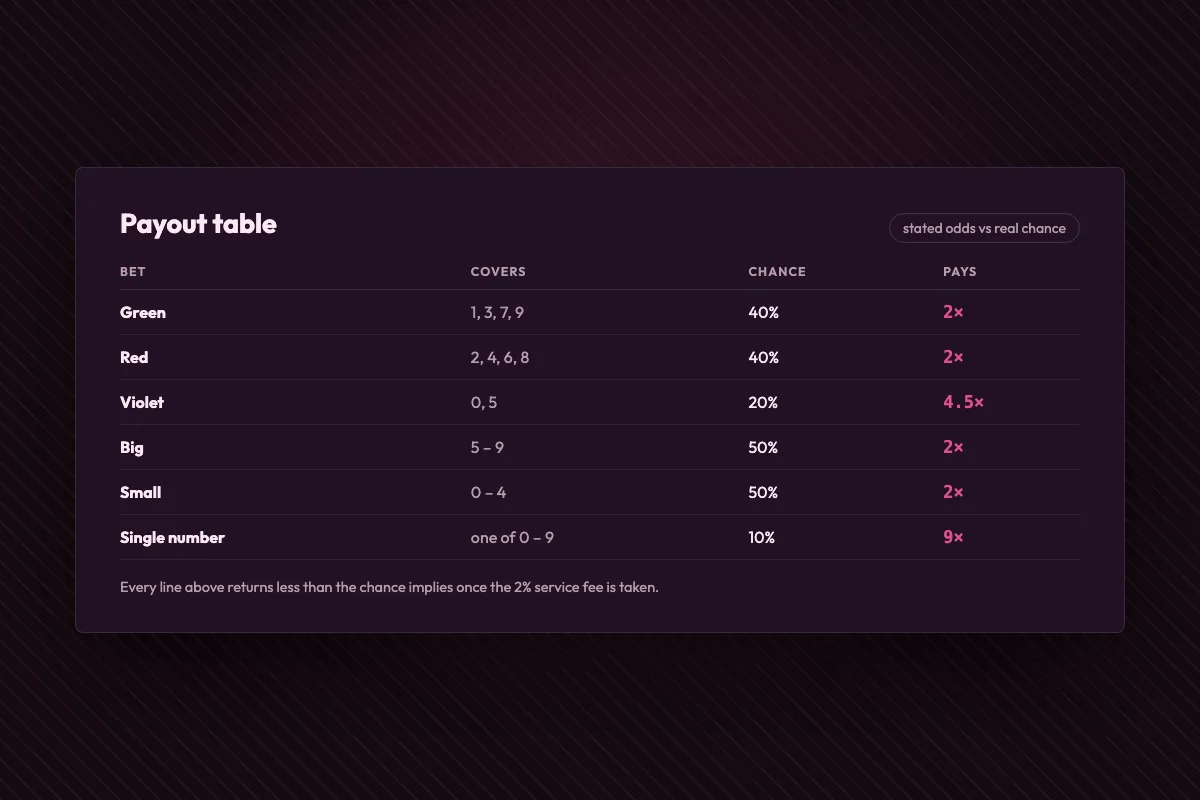
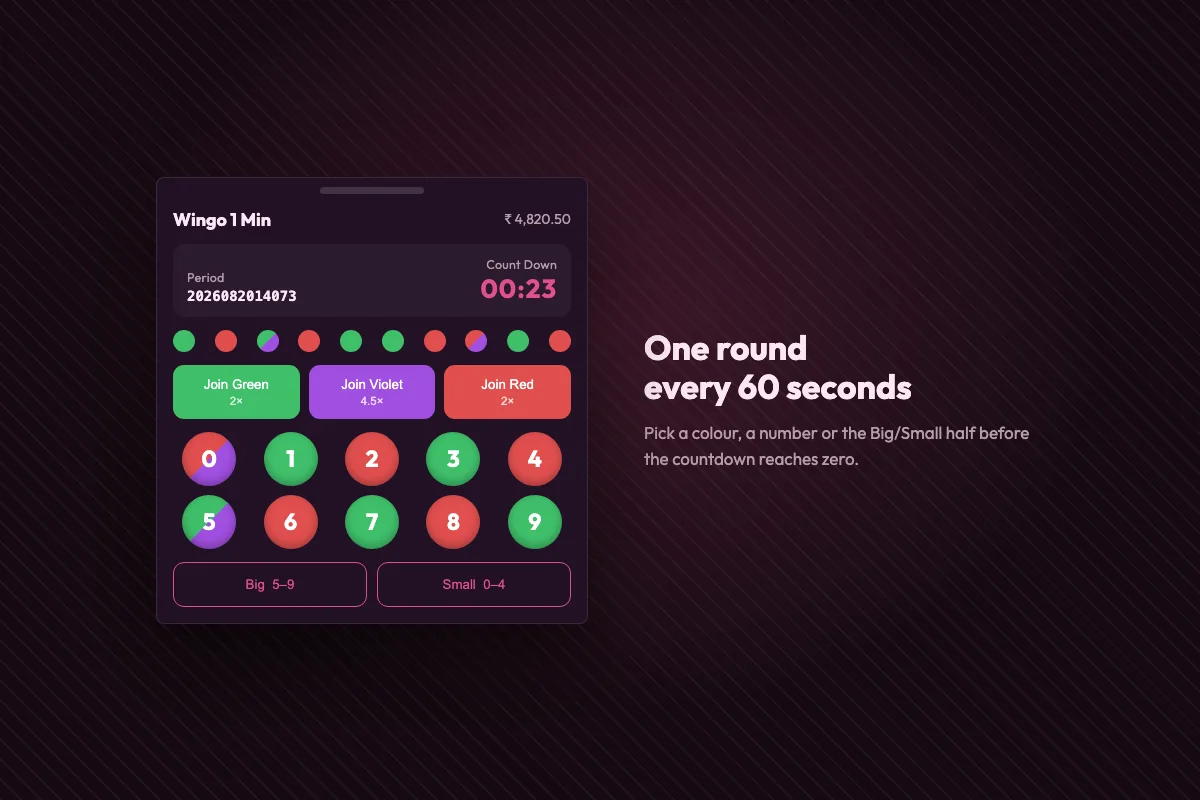
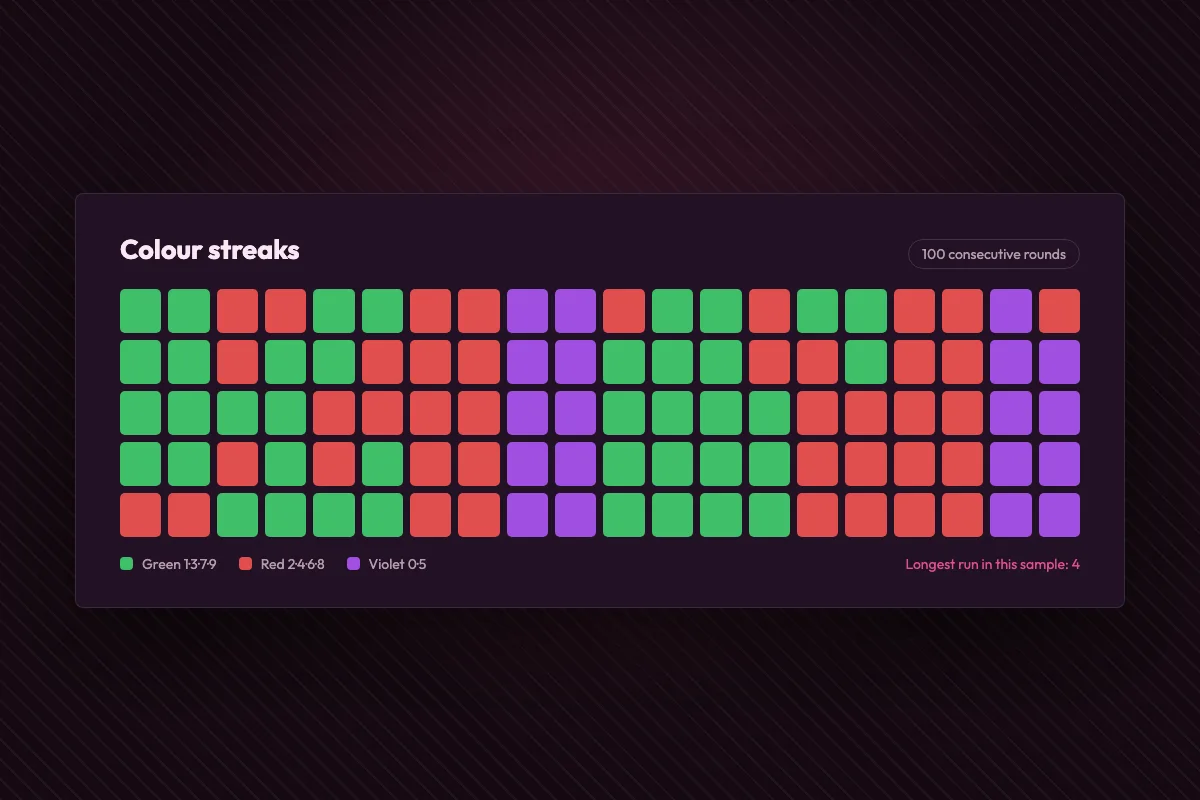
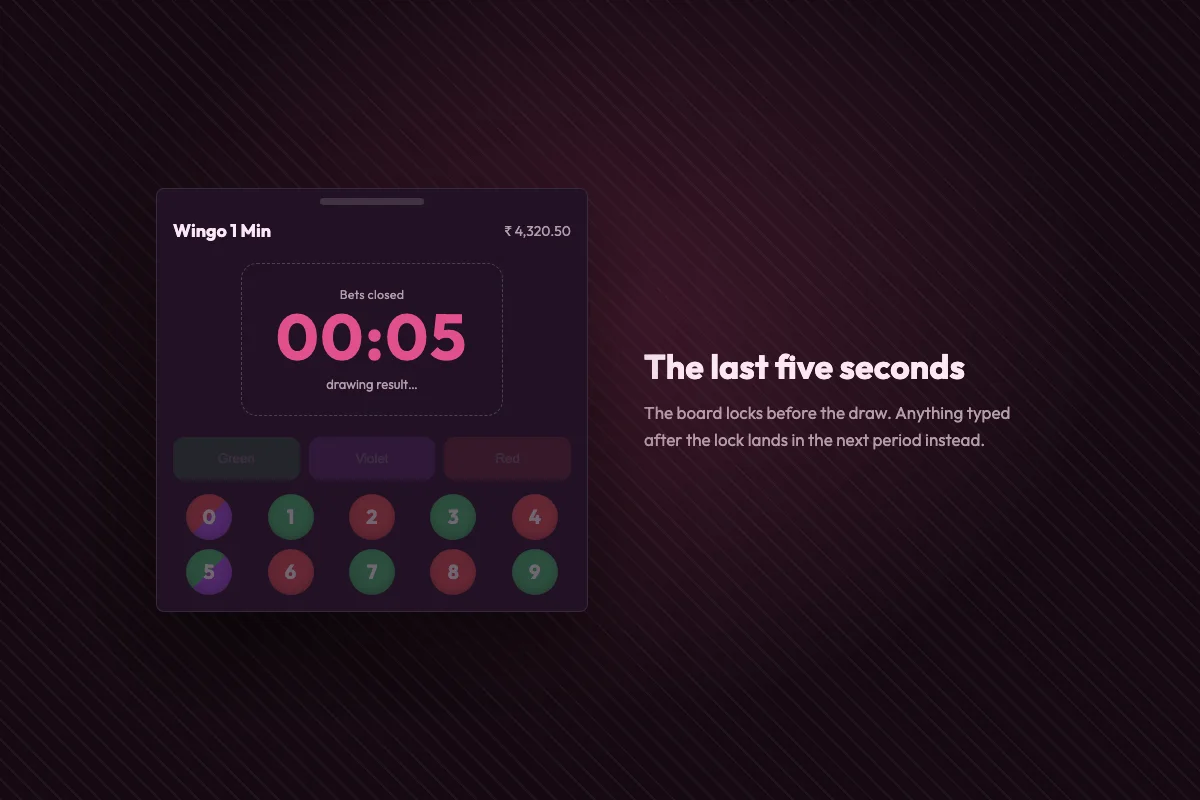
Interfaces vary between builds and the same four screens appear in all of them. The useful habit is knowing which number to find on each one before you place a bet rather than after.
04 screens worth reading
Three Checks Before a Build Sees Your Money
Not a long list — these three eliminate most of what goes wrong in this category, and none of them need technical knowledge.
Find the payout figure
The multiplier on a winning call decides what an hour costs. It should be printed somewhere before you bet. A build that never states it is withholding the only number that matters, and that omission is free to fix when the number is honest.
Check where the build came from
A listing with a named publisher can be judged; a file forwarded through a chat cannot. Nearly every edited copy in this category arrives through the second route, carrying a familiar name and a quietly reduced payout.
Withdraw once, early, at the minimum
Deposit the smallest amount allowed, play briefly, take it back out. That single experiment produces better evidence about an operator than every review of it, and it costs almost nothing while the amounts are still trivial.
What this site is
A Reference, Not a Recommendation
We are not an operator and we do not rank them. We describe how the format works and hand over checks you can run yourself, which is the only kind of advice that stays true after the brand names change.
We describe the mechanic
One number per round, split into halves, generated after betting closes. Everything else on this site follows from that one fact, including why prediction tools are impossible rather than merely unreliable.
1 format, dozens of names
We do not publish link lists
Mirrors change hands and a published address becomes an endorsement that outlives its accuracy. A method for judging any link is worth more than a list that quietly expires.
0 mirrors listed
We test what we can, and say what we cannot
Payout figures, permission lists and withdrawal paths are checkable. The finances of operators that publish no accounts are not, and we do not pretend otherwise.
Checks you can repeat
Start with the round mechanics, then read the checks. Everything else on the site is detail hanging off those two.
See where the money goesThe Whole Format in One Sentence
You are betting on half the numbers and being paid slightly less than double when you are right — so the only two decisions that change your outcome are how much you stake and how long you stay.
FAQ
What is the big small game?
Why does a win pay 1.95x instead of 2x?
Because the difference is the operator's margin. On an even-money proposition, paying less than double on the winning half is how the platform earns from a game in which half of all bets win. It works out at roughly five percent of everything staked, charged on every round regardless of outcome, which is why hourly turnover matters far more than any individual call.
Can tricks, charts or prediction groups actually work?
No, and the reason is structural rather than a matter of quality. The number is generated after betting closes, on hardware you have no access to, and each round is independent of the one before it. There is no local calculation to read and no sequence to extrapolate. Anything sold on the opposite claim is selling a repackaged app or your account credentials.
Why do so many apps run this same game?
Because the visible product is about a week of work and the audience is large. One mechanic appears under dozens of brand names, most distributed through referral links rather than store listings. What differs between them is the payout figure, the payment routes and the terms — never the structure of the round.
Is it possible to make money at this?
Individual sessions finish ahead and the arithmetic across many rounds does not. Treat it as paid entertainment with a price per hour you can calculate in advance — stake multiplied by rounds multiplied by roughly five percent — and the whole thing becomes much easier to think about clearly.